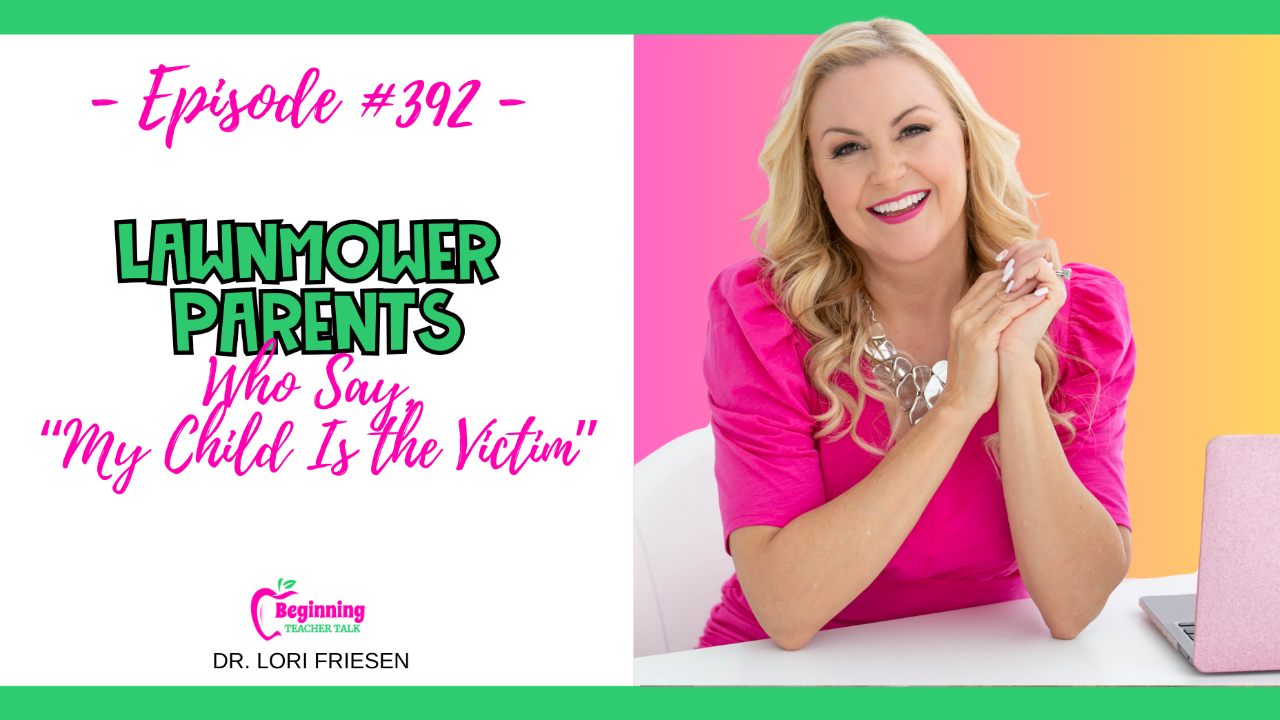
Lawnmower Parents Who Say, “My Child Is the Victim”
Click the play bar below to listen to this week's show now:
Show Notes:
An effective learning environment is built on clear rules, established expectations, and student responsibility. Yet many teachers are noticing an increase in students avoiding accountability, blaming others for their actions, disregarding boundaries, and struggling to show empathy. So what is a teacher supposed to do when the behavior happening at school is a reflection of what’s being reinforced at home?
Welcome to the era of the lawnmower parent - the well-meaning adult who rushes in to clear every obstacle before their child ever has to face it. By consistently removing discomfort and challenge, they unintentionally prevent their child from building independence, accountability, and empathy, which are the very skills you’re working to develop in your classroom. In today’s episode, I walk you step by step through how to navigate the impact of lawnmower parenting using calm, clear, and professional strategies that protect both your classroom and your nervous system.
In the classroom, this dynamic often shows up as students deflecting blame, resisting consequences, or struggling to demonstrate empathy because discomfort has always been removed for them. While this behavior can be frustrating, it’s also revealing. Many of these students haven’t been given the opportunity to sit with mistakes, repair harm, or build resilience. To help you address this, I share a five-step process you can use with your students that will equip you with the tools and language to maintain firm expectations and communicate in a way that doesn’t turn into a debate.
When a student avoids responsibility or resists consequences, frustration is a natural response. But these behaviors are often learned patterns, and breaking patterns requires teaching new ones. By calmly holding boundaries, consistently following through, and explicitly teaching students how to repair harm and practice empathy, you show them that mistakes aren’t something to escape - they’re opportunities for growth. Ultimately, you’re giving students something far more valuable than a cleared path. You’re giving them the tools to navigate obstacles on their own!

Inside this week's show, you'll learn:
- What a lawnmower parent is and how this parenting style impacts student behavior in your classroom.
- A five-step framework you can use to address challenging student behaviors while protecting your classroom and your nervous system.
- Scripted responses to use with students that reinforce strategic skill building to protect the learning environment of your classroom.
- How to effectively meet with parents using data and a clear plan to work toward a shared goal.
- Practical ways to reinforce your ultimate goal as a teacher: helping students connect their choices to the consequences that follow.
Links & resources mentioned inside this episode:
- 5-Minute Field Trips Subscription
- FREE Class at the Virtual Tropical Island Teacher Retreat: How to Prevent Challenging Behaviors from Derailing Your Entire Day
- Grab a copy of my book, Dear New Teacher, Here's Exactly What to Do: Your 5-Step R.E.A.D.Y. for School Roadmap for Elementary Classrooms
- Lung Cancer Free: One Couple’s Journey Through a “Lungs in a Box” Double Lung Transplant.
- Enter to win a $25 Amazon gift card by leaving a review for Beginning Teacher Talk on Apple Podcasts!
- Follow Dr. Lori on YouTube
- Follow Dr. Lori on Instagram
- Follow Dr. Lori on Facebook
- Follow Dr. Lori on TikTok
I hope this information is helpful as you prepare for your first, second, or third year of teaching. Until next time, remember, just because you're a beginning elementary teacher, there's no need for you to struggle like one.
💛 Lori
 Dr. Lori Friesen | Beginning Teacher Mentor
Creator of the R.E.A.D.Y. for School Academy and The Classroom Management Club, Dr. Lori Friesen has mentored thousands of beginning teachers across the country through her workshops and courses. Host of the popular podcast Beginning Teacher Talk and author of Dear New Teacher, Here's Exactly What to Do, Dr. Lori is dedicated to serving educators and inspiring learners. Learn more at drlorifriesen.com.
Want to listen on a different platform? Here are the links:
Click here to listen on Apple Podcasts.
Click here to listen on Spotify.
Click here to listen on YouTube.
Click here to listen on iHeart Radio.
Click here to listen on Audible.
Click here to listen on other apps.
Related episodes you might enjoy:
- How to Handle Difficult Parents
- When Parents Question You: Staying Confident & Professional
- How to Handle Difficult Students in Your Classroom
- Handling Challenging Behaviors with Confidence
Follow:
Are you following my podcast? I release fresh, new content every single week and I don't want you to miss out! 💛 Click here to follow on Apple Podcasts.
Leave a Review ⭐️⭐️⭐️⭐️⭐️
If you are loving the podcast, I would be so grateful if you would leave me a review over on Apple Podcasts or on Audible. Each time you leave a review, Apple Podcasts or Audible recommends my podcast to other new teachers so they feel a little less alone as they navigate their first few years of teaching.
To leave a review on Apple Podcasts, just click here to review, select "Ratings and Reviews" and "Write a Review" and let me know how this podcast is helping you inside your classroom!
To leave a review on Audible, just click here. Under "More Options" you can select "Write a review." I so appreciate your support in helping me get the word out to new teachers around the world.
Stay connected for surprise goodies & updates!
Join our mailing list to receive the latest news from our team. 💛💕 Your information will not be shared.


New goodies delivered to your inbox every week!
I LOVE spoiling my subscribers!
Get weekly info, freebies, surprises, & support. 💕
